Guides
Why foundations move in Austin
Austin is built across a geological boundary. Knowing the mapped ground conditions gives you useful questions to ask at an inspection, without diagnosing the house.
The escarpment that divides the city
Stand on Mount Bonnell and you are on the Balcones Escarpment. The Bureau of Economic Geology's sign there puts it simply: east of the escarpment are the farmlands of the Blackland Prairies, and west of it are the rangelands and woods of the Hill Country and the Edwards Plateau.
The escarpment follows a band of old faults. The Bureau describes the Balcones fault as a zone, not a single break, reaching roughly two to five miles east of the escarpment. Across the Mount Bonnell Fault alone, the rock layers on the east side sit about 600 feet lower than the same layers on the west side.
East: clay that shrinks and swells
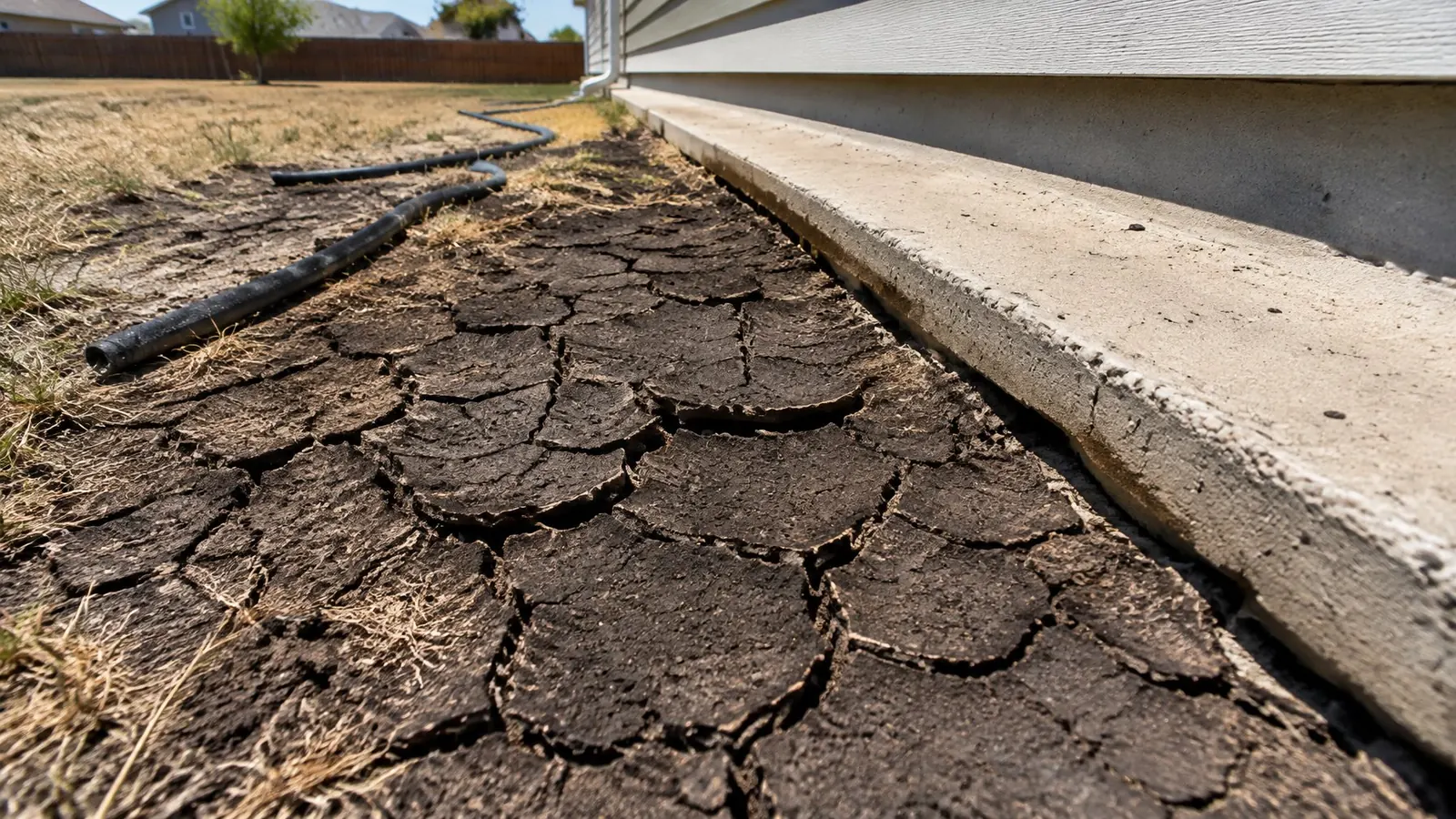
East of the fault zone the bedrock is soft clay, marl and chalk, and the soils that formed on it are the black clays of the prairie. The federal soil survey's description of the Houston Black series reads like a list of foundation complaints: very deep clay, water passing through it very slowly, and a high potential to shrink and swell.
In an ordinary year, the survey says, this soil opens cracks from half an inch to four inches wide, reaching a foot or more down, and they stay open for 90 to 150 days. The reference pit for the series was dug in Travis County, in farmland north-east of Manor. The closely related Heiden series was first named in Travis County too.
A slab on this ground is a stiff raft on something that changes volume. The outside edges dry first in summer and drop. The middle, shaded by the house, stays damp and high. After rain the pattern can reverse.
West: rock close to the surface
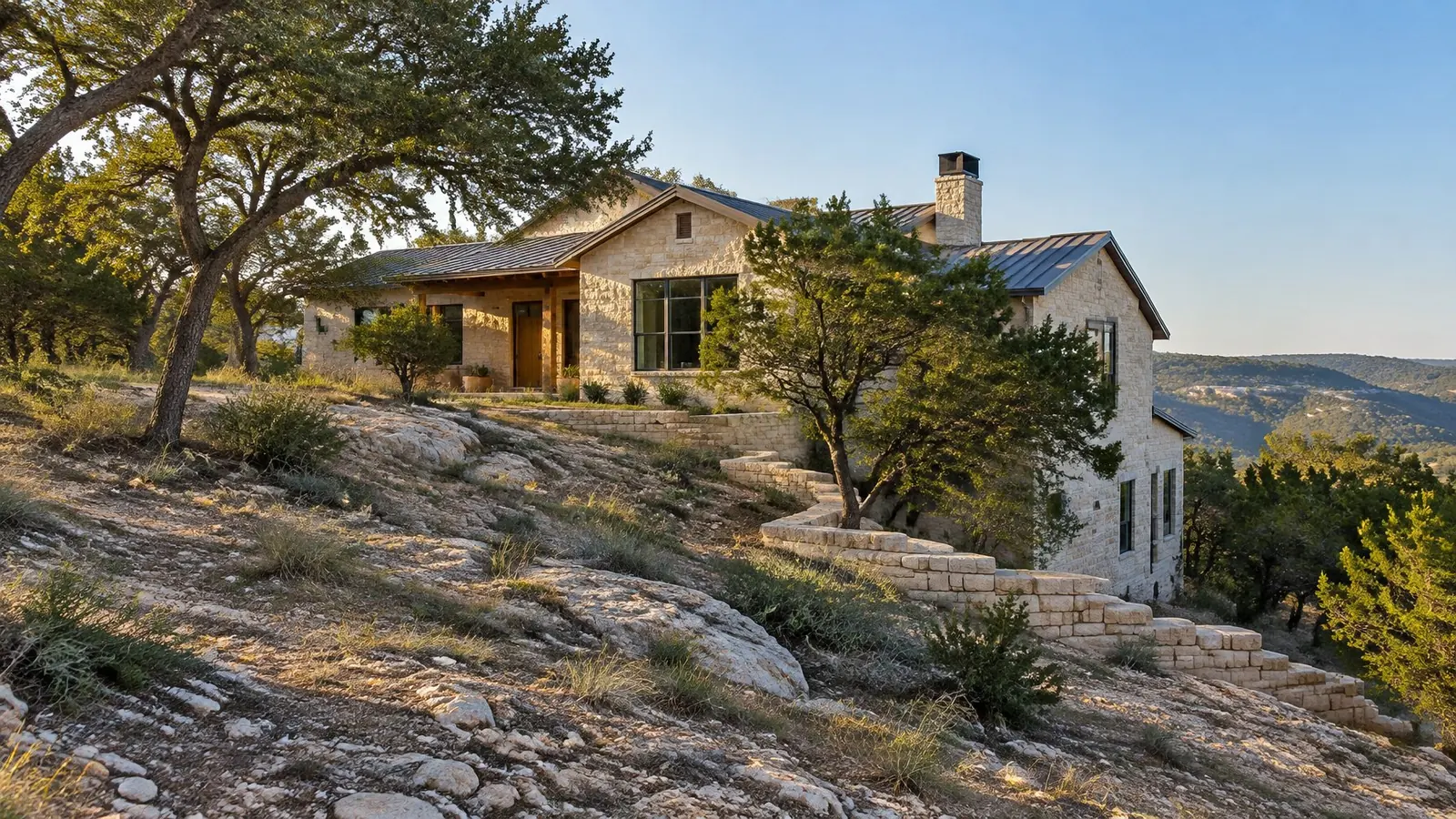
West of the escarpment the Bureau describes the soils as thin and rocky. The survey's Brackett series, typical of Hill Country slopes, has weathered limestone starting between five and twenty inches down.
Shallow rock is a firm base, and there is little clay to swell. The trouble comes from the shape of the land. To build on a slope, part of the lot is cut into the hill and the spoil is used to fill the low side. A house can end up half on rock and half on fill, and fill settles. Rain also runs along the top of the rock and comes out wherever the builder cut into it, which may be under the house.
In between: it changes street by street
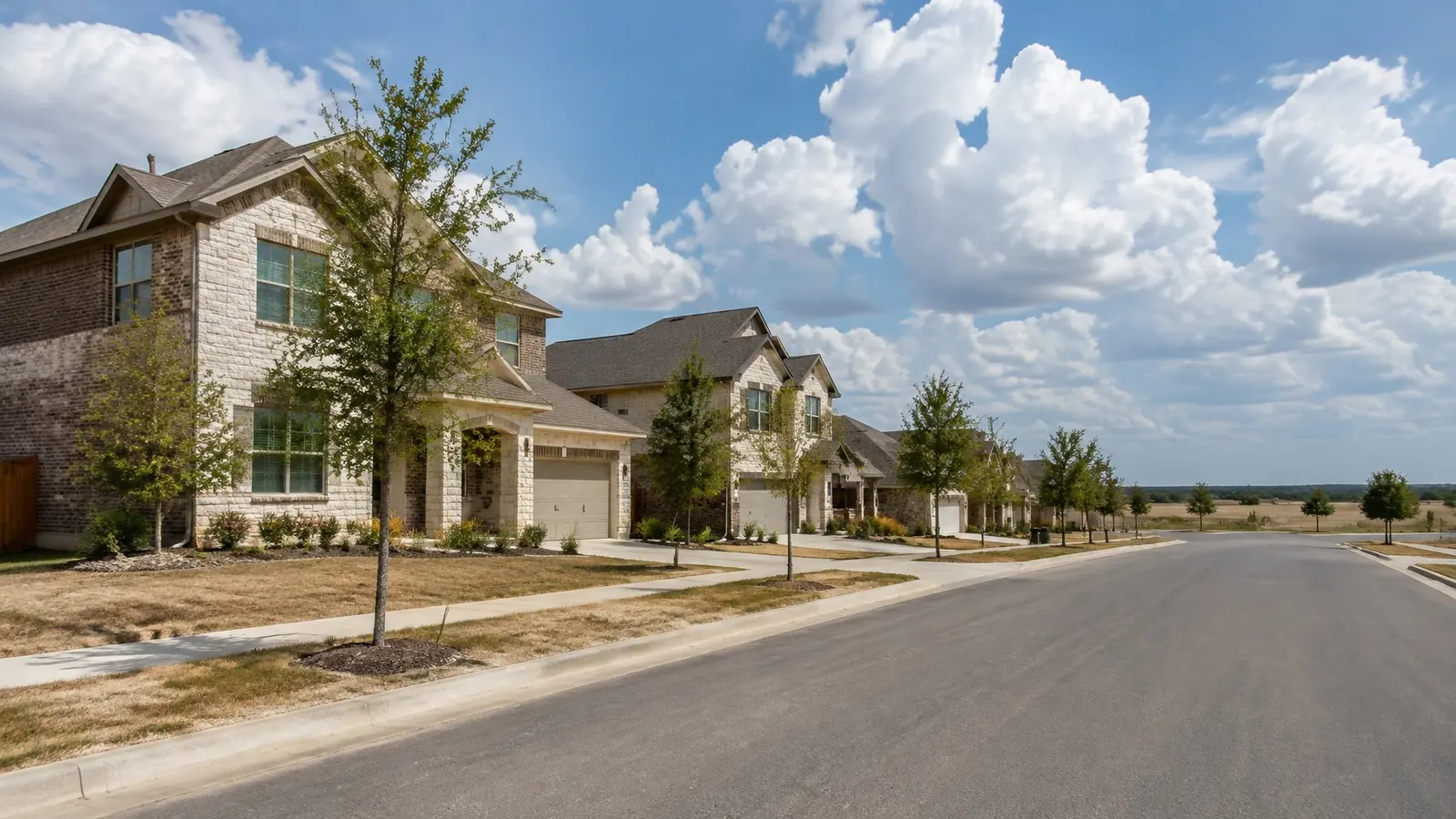
Inside the fault zone the layers are broken into blocks. The Bureau lists limestones and clays alternating here: the Georgetown, Del Rio, Buda and Eagle Ford formations, then the Austin Chalk and Taylor Clay further east. One block of houses can stand on chalk a couple of feet down while the next stands on deep clay.
So do not assume your lot matches a friend's across town, or even across the creek. You can look up the mapped soil at your own address on the NRCS Web Soil Survey. It is a useful thing to have open when a company explains its repair plan.
What sets movement off
Drought
Long dry summers pull moisture from the clay around the outside of the house. The soil shrinks away from the slab and the edges follow it down.
Heavy rain after drought
Dry, cracked clay swallows the first storm quickly and swells, often unevenly.
Large trees
A mature tree draws a great deal of water from the soil near it. Austin regulates trees 19 inches or more in diameter, so talk to the city before cutting roots or removing one.
Leaks
A dripping supply line or a cracked drain under a slab keeps one patch of clay wet all year, and that patch rises.
Slab or pier and beam
Austin has houses on concrete slabs and houses raised on piers with a crawl space. Establish which type your house has before comparing repair proposals. A slab shows clay movement as cracks and tilts. A pier and beam house shows it as dips and bounce, and adds wood rot to the list. The pages on slab cracks and pier and beam floors take each in turn.
Questions about Austin ground
Which side of Austin is worse for foundations?
Neither is simply worse. The clay side moves with the weather. The limestone side has slopes, fill and runoff. Each needs a different kind of care.
My trees are protected. Can roots near the slab still be dealt with?
Possibly, with a permit. The city says a regulated tree needs a permit to remove or impact, and digging in its root zone counts. Start with the city's page on trees on residential property.
Does a house on rock never need foundation repair?
It can. Fill that settles, water under the slab and badly built footings cause problems on limestone as well.
Want it looked at?
Phone, say where the house is and what has changed, and you will be speaking with an independent local foundation repair company. It can book a visit to measure the floors and tell you what it finds.
Calls may be recorded. Austin Foundation Repair Help refers callers and repairs nothing itself, as the referral disclosure sets out. Call details are handled under the privacy policy.