Signs
Floors that slope, sag or bounce
People say the floor is off. It helps to work out which kind of off, because a slope, a sag and a bounce come from different places.
Three complaints, three meanings
Slope
The whole room runs downhill toward one wall. A ball rolls the same way wherever you set it down. This is about the level of whatever holds the floor up.
Sag
There is a dip in the middle of a room or along a hallway, and furniture leans inward. Something between two supports has dropped or weakened.
Bounce
The floor gives when you walk and the china rattles. That is a framing matter: joists that are long, thin, cracked or damp.
On a concrete slab
A slab does not bounce and seldom sags. What it does is tilt or bend. If an outside edge has gone down, rooms along that wall slope toward it. If the middle has come up, which happens on swelling clay or over a leaking pipe, floors slope away from the centre of the house and the edges only look low.
The difference decides the repair, and you cannot judge it by eye. That is why a company takes readings in every room before it draws anything.
On piers and beams
A raised wood floor can do all three. It slopes when a line of piers has sunk or leaned. It sags where piers are too far apart or a beam has rotted. It bounces where joists are undersized or have been notched for pipes. The good news is that everything is reachable from the crawl space. The pier and beam page goes through what gets checked under there.
Measuring it properly
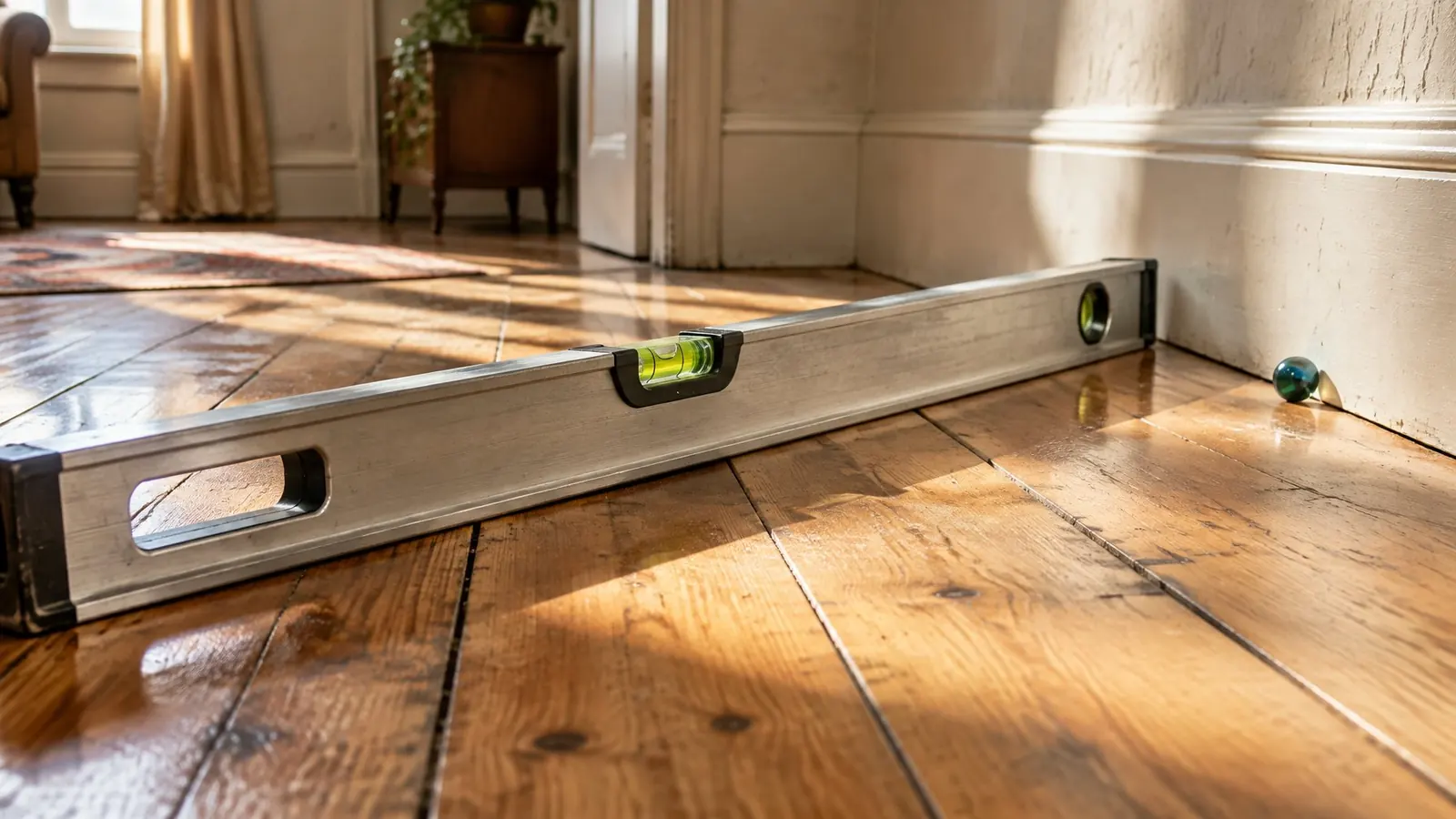
A marble shows there is a slope. It does not show how much, or where the high point is. A four-foot level is better. Repair companies and engineers use an instrument that reads height differences from one reference spot, room by room, and plot the numbers on a floor plan.
Ask for a copy of that plan. Keep in mind that no slab is poured perfectly flat, so one set of readings cannot prove the floor has moved. Readings that line up with cracks and binding doors make the case. Readings taken again months later show whether anything is still moving.
Causes that are not the foundation
- Wood flooring that has cupped or buckled from moisture, which feels like waves underfoot.
- Subfloor panels that have come loose from the joists and squeak.
- A wall taken out during a remodel that used to carry part of the floor above.
- A floor built slightly out of level that nobody noticed until the furniture changed.
Questions about floors
How much slope is too much?
There is no figure that fits every house. Engineers weigh the readings together with cracks, doors and the age of the house, and they care about whether it is getting worse.
Can a dip be fixed without lifting the whole house?
Sometimes. A sag in a pier and beam floor may need a pier or a new length of beam under that spot only. A tilted slab is a different job. The company that inspects will say which you have.
New tile cracked in a line across the kitchen. Is the floor moving?
A straight line of cracked tiles often sits over a crack in the slab below. Whether that crack is active is the question, and the slab crack page covers it.
Want it looked at?
Phone, say where the house is and what has changed, and you will be speaking with an independent local foundation repair company. It can book a visit to measure the floors and tell you what it finds.
Calls may be recorded. Austin Foundation Repair Help refers callers and repairs nothing itself, as the referral disclosure sets out. Call details are handled under the privacy policy.