Signs
Cracks in brick, walls and ceilings
A crack shows where a wall has been pulled or squeezed. Its shape and direction tell you more than its width does.
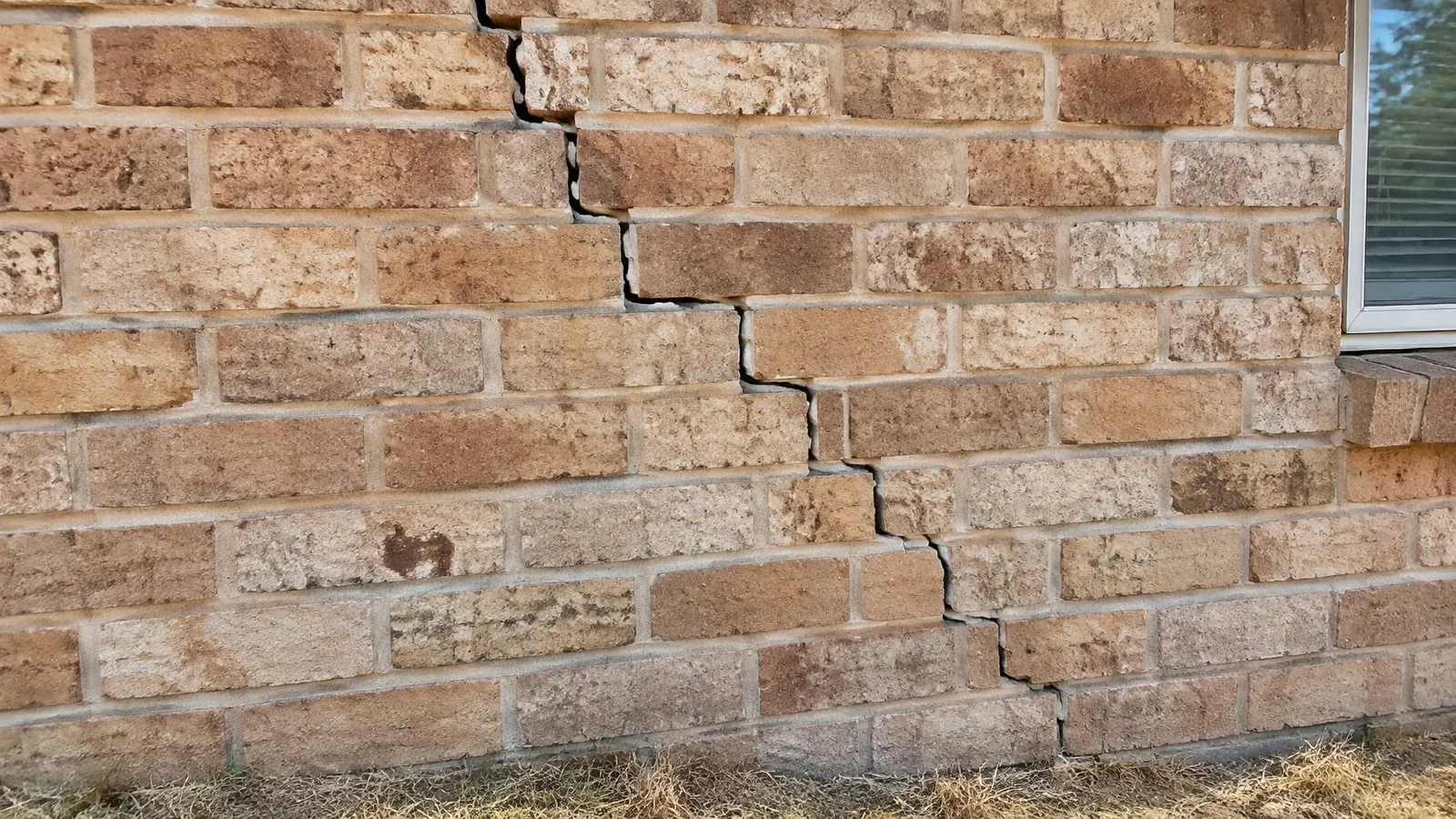
Shapes that tend to go with movement
None of these proves anything alone. They are the patterns that make an inspector get the measuring gear out.
- A crack in brick that climbs through the mortar like a staircase, wider at one end than the other.
- A diagonal crack in drywall that starts at the top corner of a door or window and heads for the ceiling.
- One line that carries on from a wall across the ceiling.
- A gap opening between the brick and a window frame, or at the corner of the garage door opening.
- A crack that was filled and painted and has come back in the same place.
Shapes that are usually something else
Plenty of cracks appear in houses whose foundations have not moved at all.
- Straight hairlines along drywall seams, where the tape has let go.
- Small round bumps or dimples where nail or screw heads have pushed out.
- A fine crack where the ceiling meets an inside wall that opens in winter and closes in summer. Roof trusses flex with the seasons and lift the ceiling slightly.
- Short cracks in brick directly above a window, where the steel bar that carries the brick has rusted and swollen.
- Crazing in old plaster.
Why brick and stone show it first in Austin
On most houses here the brick or limestone outside is a veneer: one layer of masonry tied back to a wood frame, standing on the outer edge of the slab. The frame can flex a little. The masonry cannot. When one corner of the slab rises or drops by a fraction of an inch, the mortar joints give way in steps.
On the clay east of the escarpment this often keeps time with the weather. Joints widen through a dry summer as the soil shrinks from the slab edge, then tighten after a wet spell. A crack that opens and closes with the seasons is telling you about the soil as much as about the house.
What a repair company looks at
Floor heights near the crack
Readings across the house show whether the cracked corner sits low, sits high or matches the rest.
Both ends of the crack
A taper shows which way that part of the wall rotated.
The ground below it
A downspout, a tree, a flower bed that holds water, or soil pulled back from the slab can each explain a local dip.
Plumbing history
A leak under a slab wets one patch of clay and can lift that area while the rest stays put.
If repair is proposed
Where readings show that an edge has dropped, the usual proposal is a row of piers under that edge, described in the guide to repair methods. Mending the brick is separate masonry work and normally comes afterwards. Brick that is repointed before the cause is dealt with tends to crack again along the new mortar.
Questions about cracks
How wide does a crack have to be before it matters?
No single width settles it. A narrow crack that is growing says more than a wide one that has not changed in ten years. Mark it, date it and compare.
Should I fill the crack before the inspection?
Leave it. An open crack shows its width and taper, and a filled one hides both. Patch it after you know why it is there.
The crack closed up after it rained. Is the problem gone?
It means the soil took up water and swelled back. On Austin clay the same crack commonly reopens next summer. Whether that cycle needs repair or only better drainage is what an inspection is for.
Want it looked at?
Phone, say where the house is and what has changed, and you will be speaking with an independent local foundation repair company. It can book a visit to measure the floors and tell you what it finds.
Calls may be recorded. Austin Foundation Repair Help refers callers and repairs nothing itself, as the referral disclosure sets out. Call details are handled under the privacy policy.