Guides
Looking after a foundation in Austin
On clay, the aim is simple to state and fiddly to do: keep the moisture in the soil around the house as even as you can, all the way round and all year.
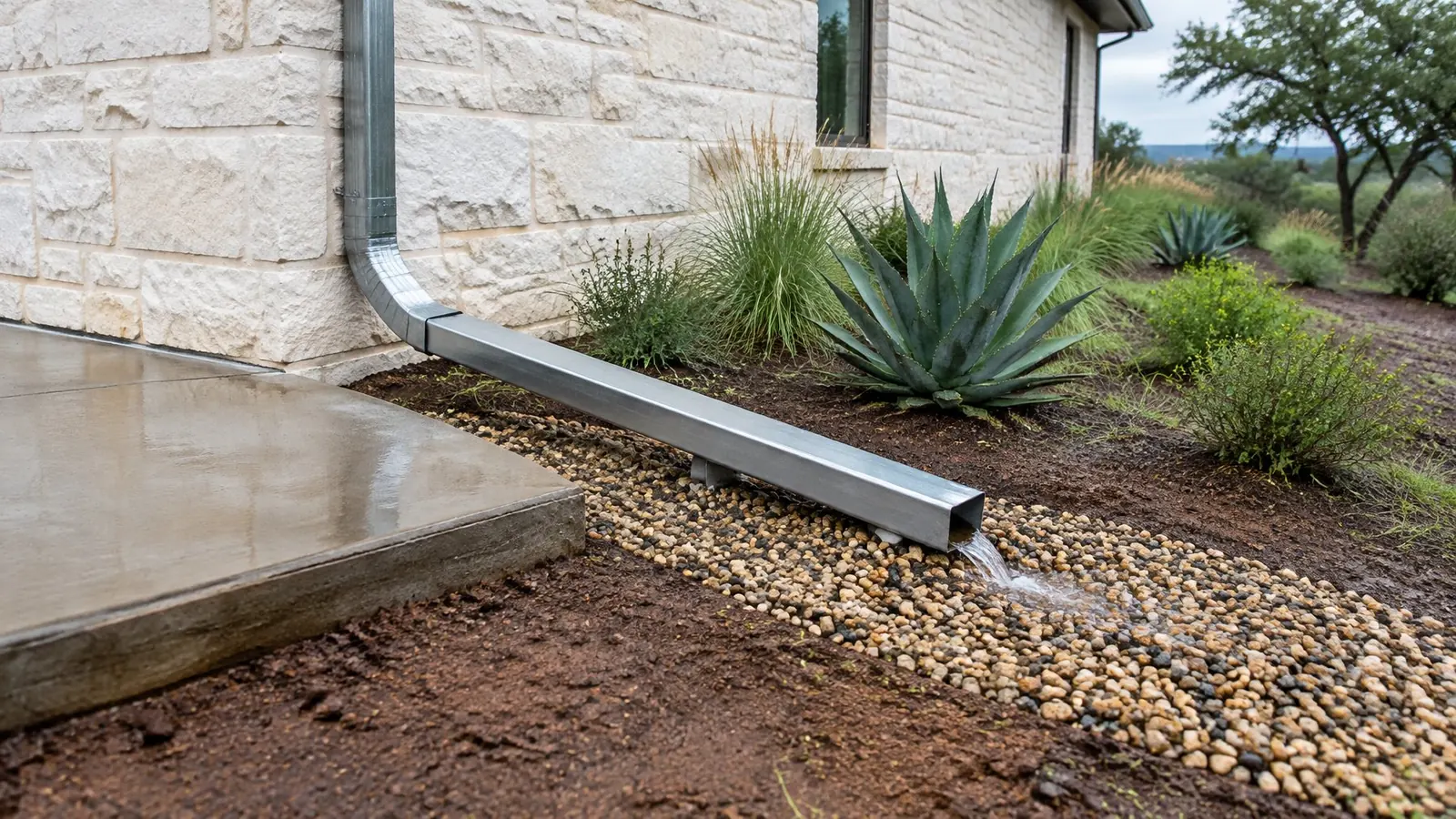
After rain: get water away
Gutters
Clean them at least twice a year, and check them after a storm.
Downspouts
Extend each one so it empties several feet from the wall, onto ground that slopes away.
Grading
Soil should fall away from the house on every side. Fill low spots with compacted soil so water cannot stand against the wall.
Slab edge
Keep a few inches of bare concrete showing below the brick. Soil or mulch piled higher hides cracks and can let water in behind the brick.
In drought: careful watering
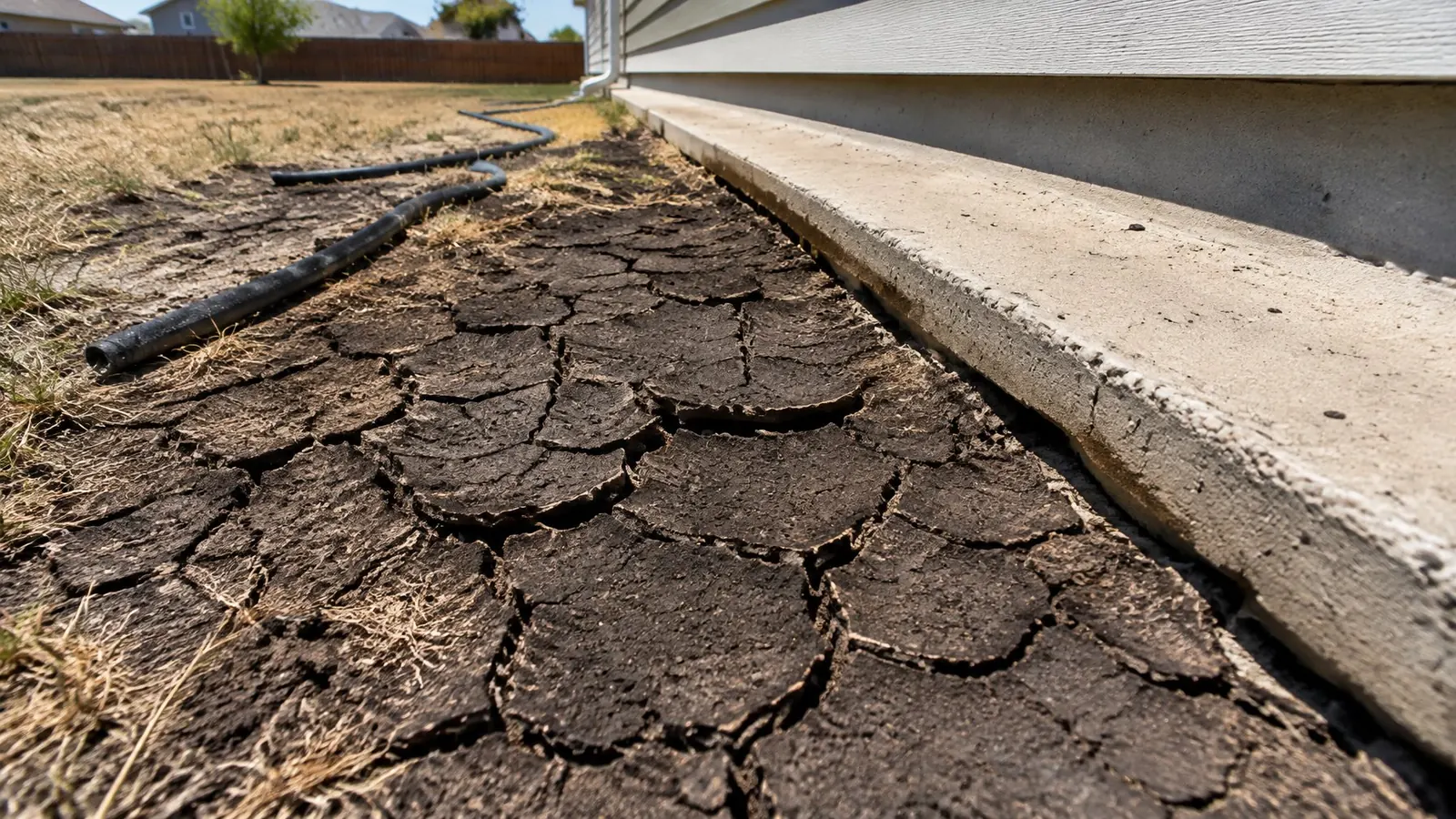
When the clay shrinks back and a gap opens along the slab, many Texas homeowners water the soil near the foundation to slow the drying. The idea is to hold steady moisture, not to soak the ground.
A soaker hose laid a little way out from the slab, run long enough to dampen the soil without puddling, is the usual tool. Do not push a hose into the gap and flood it. Water each side of the house, not only the side with the cracks.
What Austin's watering rules allow
A hand-held hose
The current Austin Water schedule allows a hose held in the hand on any day at any time. Check the city page before watering because restrictions can change.
Sprinklers and drip systems
These are limited to assigned days and to the hours before 10 a.m. and after 7 p.m. Look up yours on Find Your Watering Day.
Trees
Watering a tree with a soaker hose or bubbler is exempt from the day limits, which helps where a tree and a foundation share the same dry soil.
Before using a timer
Check the current watering days for your address and irrigation type. A foundation-watering plan still needs to follow the water supplier's rules.
Stages change, and so do towns
Austin moves between stages as the Highland Lakes rise and fall, so check the current one before setting a timer. Neighbouring towns write their own rules. In Round Rock, for instance, soaker hoses must keep to the assigned watering days.
Trees
Trees take water from the soil, and a big one near the house dries the clay on that side. That is not a reason to cut down a healthy live oak. Watering the tree itself during drought helps both tree and soil. If roots are lifting paving or a company suggests a root barrier, remember that Austin protects trees 19 inches or more in diameter and requires a permit to impact them. When planting, give a new tree room to reach full size well away from the slab.
A twice-a-year walk round
Do it once at the end of summer and once in spring. Ten minutes each time.
- Is there a gap between soil and slab? How wide, and on which sides?
- Any new cracks in brick or at the slab edge? Have the old ones changed?
- Do all the doors still latch?
- Is the water bill steady? A rise with no change in use can mean a leak.
- On a pier and beam house: are the crawl space vents clear, and is the ground under the house dry?
Questions about upkeep
Can watering fix a foundation that has already moved?
It can slow further drying and sometimes eases seasonal cracks. It does not lift a slab that has settled.
Is it possible to overwater?
Yes. Saturated clay swells, and water standing against a slab is its own problem. Damp is the target, not wet.
Do houses on limestone in west Austin need watering?
Much less, as there is little clay to shrink. Drainage and runoff matter more there.
Want it looked at?
Phone, say where the house is and what has changed, and you will be speaking with an independent local foundation repair company. It can book a visit to measure the floors and tell you what it finds.
Calls may be recorded. Austin Foundation Repair Help refers callers and repairs nothing itself, as the referral disclosure sets out. Call details are handled under the privacy policy.