Signs
When water pools against the house
Water is behind most foundation movement in Austin. Too little in one place, too much in another, and the soil under the house ends up at different heights.
Why puddles matter more on clay
The federal soil survey describes the Heiden series, a clay first named in Travis County, this way: water goes in fast while the soil is dry and cracked, and very slowly once it is wet. So the first storm after a dry spell pours down the cracks beside your slab. Then the clay swells, seals, and the next rain sits on top.
The side of the house where that happens rises. The side under the roof overhang, or beside a thirsty tree, stays dry and low. A slab is stiff and does not like being bent that way.
Where to look after a hard rain
Go out with an umbrella while it is still coming down, then again an hour after it stops.
- Downspouts that empty right at the wall.
- Soil or mulch that slopes toward the house, or has been built up above the slab edge.
- Flower beds ringed with metal or stone edging that turn into a trough.
- The drip from the air conditioner's condensate pipe, which runs all summer in one spot.
- Sprinkler heads that spray the wall.
- A patio or driveway that tilts toward the house.
- On a sloping lot, the uphill side, where runoff arrives from above.
Fixes that do not need a foundation company
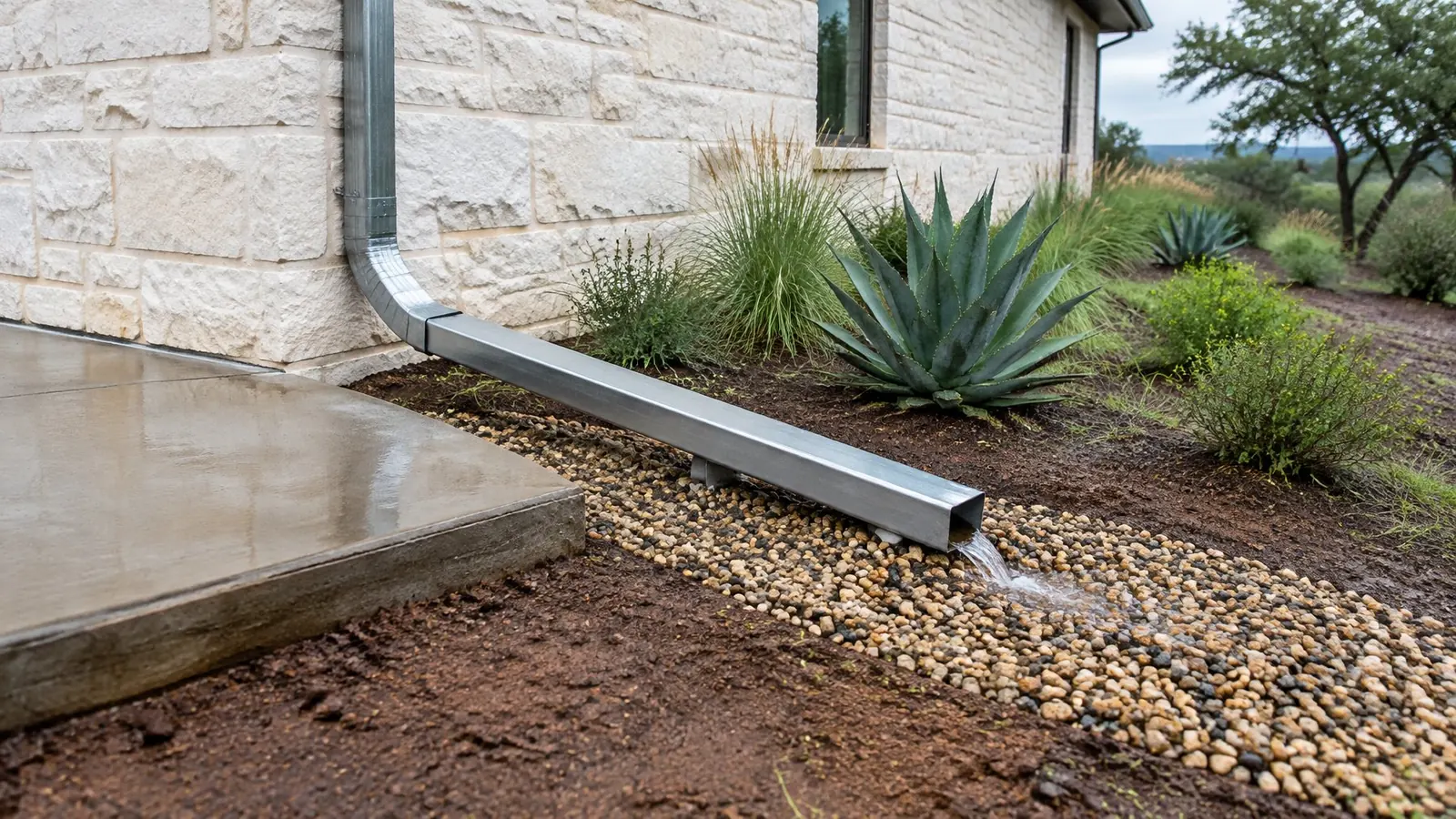
Add extensions so downspouts let go several feet out. Clear the gutters. Rake soil so it falls away from the wall, and keep a band of bare slab showing between the soil and the brick. Take out edging that traps water, or cut drain gaps in it. Turn sprinkler heads away from the wall. For bigger jobs, such as a swale across the yard or a buried drain, a landscaper or drainage contractor is the trade to ask.
Which trade for which problem
| What is happening | Who to call |
|---|---|
| Water stands in the yard but the house shows no cracks or sticking doors | A landscaper or drainage contractor |
| Water is getting into a crawl space or a below-ground room | A firm that does waterproofing, which is a separate trade |
| The water bill has jumped, or a floor feels warm or damp | A plumber, to test for a leak under the slab |
| Cracks, binding doors or sloping floors have appeared near where water collects | A foundation repair company. That is what the number on this page is for |
Creeks and floodplains
Austin is laced with creeks, and a lot beside one may lie in a mapped floodplain. That affects more than insurance. The city notes that work normally exempt from a permit may still need one in a floodplain. Check your address on the city's floodplain map page before regrading or starting structural work.
Questions about water and drainage
Is standing water alone a reason to call a foundation repair company?
Not alone. Sort the drainage first. Call about the foundation when the house itself shows signs: cracks, doors, floors.
If I fix the drainage, will the cracks close?
Sometimes they ease over a season or two as moisture evens out. It is not certain, and movement that has gone on for years may not reverse.
Should I water the dry side instead?
Evening out moisture is the idea behind foundation watering, and Austin has rules about it. See looking after a foundation.
Want it looked at?
Phone, say where the house is and what has changed, and you will be speaking with an independent local foundation repair company. It can book a visit to measure the floors and tell you what it finds.
Calls may be recorded. Austin Foundation Repair Help refers callers and repairs nothing itself, as the referral disclosure sets out. Call details are handled under the privacy policy.