Guides
Foundation inspections: who, what and what to keep
Three kinds of people may look at your foundation. They are paid differently, they produce different paper, and it is worth knowing which one is standing in your living room.
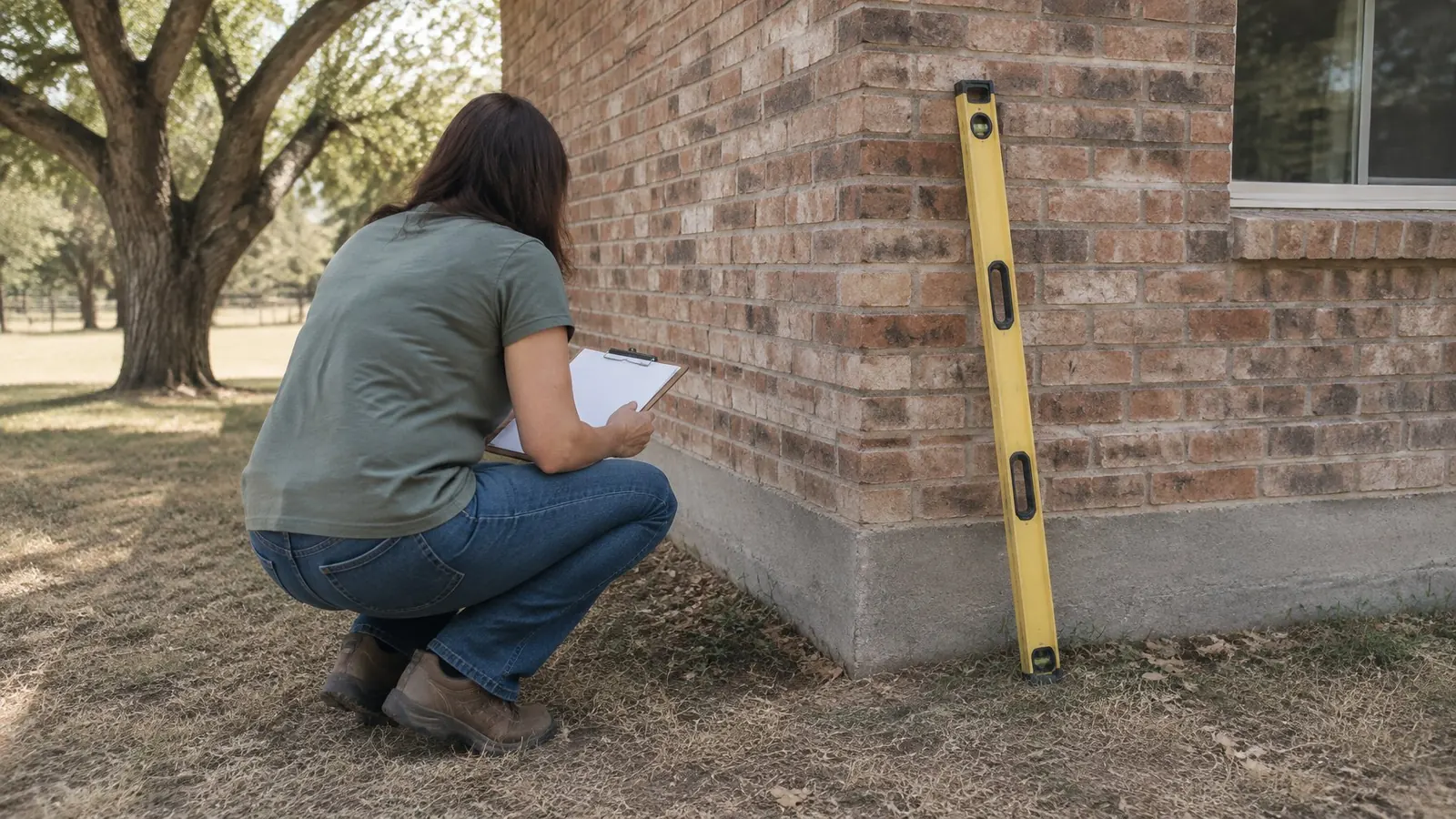
Who inspects
A repair company's evaluator
Works for a business that sells repairs. Measures the house, gives an opinion and proposes a plan with a price. This is who you reach by calling the number here.
A structural engineer
A licensed professional engineer you hire directly. Sells no repairs. Produces a signed report on what has happened and what, if anything, should be done.
A home inspector
Looks at the whole house during a sale and reports signs of movement. Will usually recommend an engineer or a repair company if anything stands out.
When an engineer is worth hiring
For a small, obvious problem, a repair company's evaluation is often enough. Consider paying for an independent engineer when the house is being sold, when two companies disagree, when the proposed job is large, or when you simply want an opinion from someone with nothing to sell.
Some towns settle the matter for you. Round Rock, for one, asks for an engineer's sealed plan with every foundation repair permit.
What a thorough inspection covers
- Floor height readings in every room, plotted on a sketch of the floor plan.
- Each crack inside and out: where it is, which way it runs, how wide.
- Doors and windows that are out of square.
- The outside: slab edge, brick, grading, gutters, trees and their distance from the house.
- On a pier and beam house, a trip through the crawl space.
- Questions about the house's past: leaks, earlier repairs, additions, when signs first appeared.
Ask for these in writing
- The floor height map, with the reference point marked.
- An opinion on the cause, not only a list of symptoms.
- The repair plan as a drawing, showing each pier.
- A statement of whether an engineer designed or reviewed the plan.
- What is excluded.
- If nothing needs doing, a note saying so. That is useful at a sale.
Keep everything. A dated height map is the baseline that later readings are compared against.
Checking an engineer's licence
In Texas, engineers are licensed by the Texas Board of Professional Engineers and Land Surveyors. Its public roster lets you search by name and see whether a licence is current. A sealed drawing or letter carries the engineer's name and licence number, so the check takes a minute.
Questions about inspections
How long does an inspection take?
It varies with the size of the house and whether there is a crawl space. Ask when you book, and plan to be home so you can point things out.
Should I get more than one?
For anything beyond a minor job, yes. Two plans that agree give you confidence. Two that differ give you questions to ask.
The inspector said to monitor it. What does that mean in practice?
Keep the height map, mark and date the cracks, and have readings taken again after a dry summer and a wet spring. Movement shows as a change between two sets of numbers.
Want it looked at?
Phone, say where the house is and what has changed, and you will be speaking with an independent local foundation repair company. It can book a visit to measure the floors and tell you what it finds.
Calls may be recorded. Austin Foundation Repair Help refers callers and repairs nothing itself, as the referral disclosure sets out. Call details are handled under the privacy policy.