Signs
Doors that stick and windows that won't latch
A door frame is a rectangle fixed into a wall. When the floor under one side of it moves, the rectangle leans, and the door is the first thing to complain.
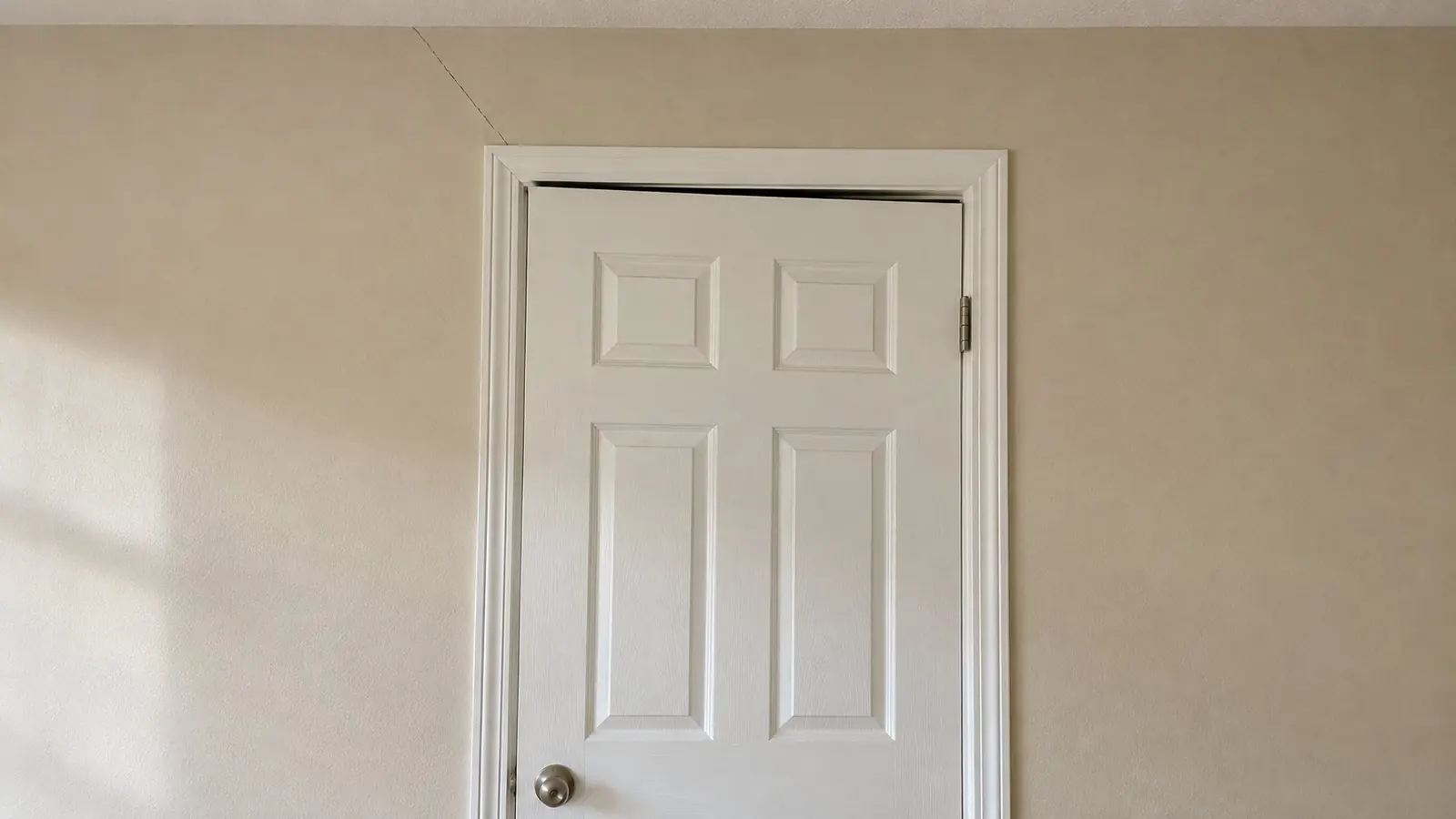
What a leaning frame looks like
- With the door shut, the gap along the top is wide at one corner and pinched at the other.
- The latch bolt hits above or below the hole in the strike plate.
- The door swings open, or closed, when you let go of it.
- It rubs at the top corner on the latch side, and the paint there is scuffed.
- Sliding windows drag, and the lock on a double-hung window no longer meets its keeper.
- Several doors in the same end of the house changed at about the same time.
The last point matters. A single stubborn door is usually about that door. A cluster of them points at what they are standing on.
Ordinary reasons a door binds
Wood takes up moisture. In a humid Austin summer a solid wood door can swell enough to drag along its whole latch edge, and it shrinks back when the heating comes on. That looks different from a leaning frame: the gap stays even and simply gets tighter.
Other everyday causes are hinge screws that have worked loose, so the door drops at the latch side; years of paint on the edges; new flooring that raised the floor under the swing; and frames that were hung a little out of true when the house was built.
A two-minute check
You need a level, or a phone with a level app.
Look at the gap
Close the door and compare the gap at the two top corners. Even and tight suggests swelling. Tapered suggests the frame has leaned.
Check the hinges
Open the door and try each hinge screw. If the top hinge is loose, tighten it and see whether the problem goes away.
Level the head of the frame
Hold the level against the underside of the top of the frame, then on the floor in the doorway. Write down which way each one runs.
Note the season
Write the date beside your notes. A door that binds every August and eases every March is following the soil.
Before you plane it
Shaving the top of a door makes it close again and removes the evidence. If you do it, write down the date and how much came off. If the same door needs trimming a second time, the frame is still moving, and that is worth saying when you call.
A repair company will map floor heights through the house and see whether the doors that bind sit over the low or high areas. If the foundation is later lifted, doors that were trimmed to fit a leaning frame may need adjusting the other way.
Questions about doors and windows
My doors only stick in late summer. Does that rule out the foundation?
No. Seasonal sticking is what clay soil produces: the ground shrinks in the heat and the edges of the slab follow it down. Humidity produces seasonal sticking too, so look at whether the gap is tapered.
Windows upstairs are hard to open but the ground floor is fine. Is that the foundation?
It is less likely. Movement in the foundation normally shows at ground level first. Upstairs only, think about paint, swollen sashes or the framing.
Will the doors work again after a repair?
Often they improve, and some need rehanging. Nobody can promise every door returns to how it was, so ask the company what it expects in your house.
Want it looked at?
Phone, say where the house is and what has changed, and you will be speaking with an independent local foundation repair company. It can book a visit to measure the floors and tell you what it finds.
Calls may be recorded. Austin Foundation Repair Help refers callers and repairs nothing itself, as the referral disclosure sets out. Call details are handled under the privacy policy.