Signs
Pier and beam foundation repair in Austin
Many houses in Austin's older central neighbourhoods do not sit on a slab. They stand on rows of short piers, with a crawl space underneath and a wood floor on top.
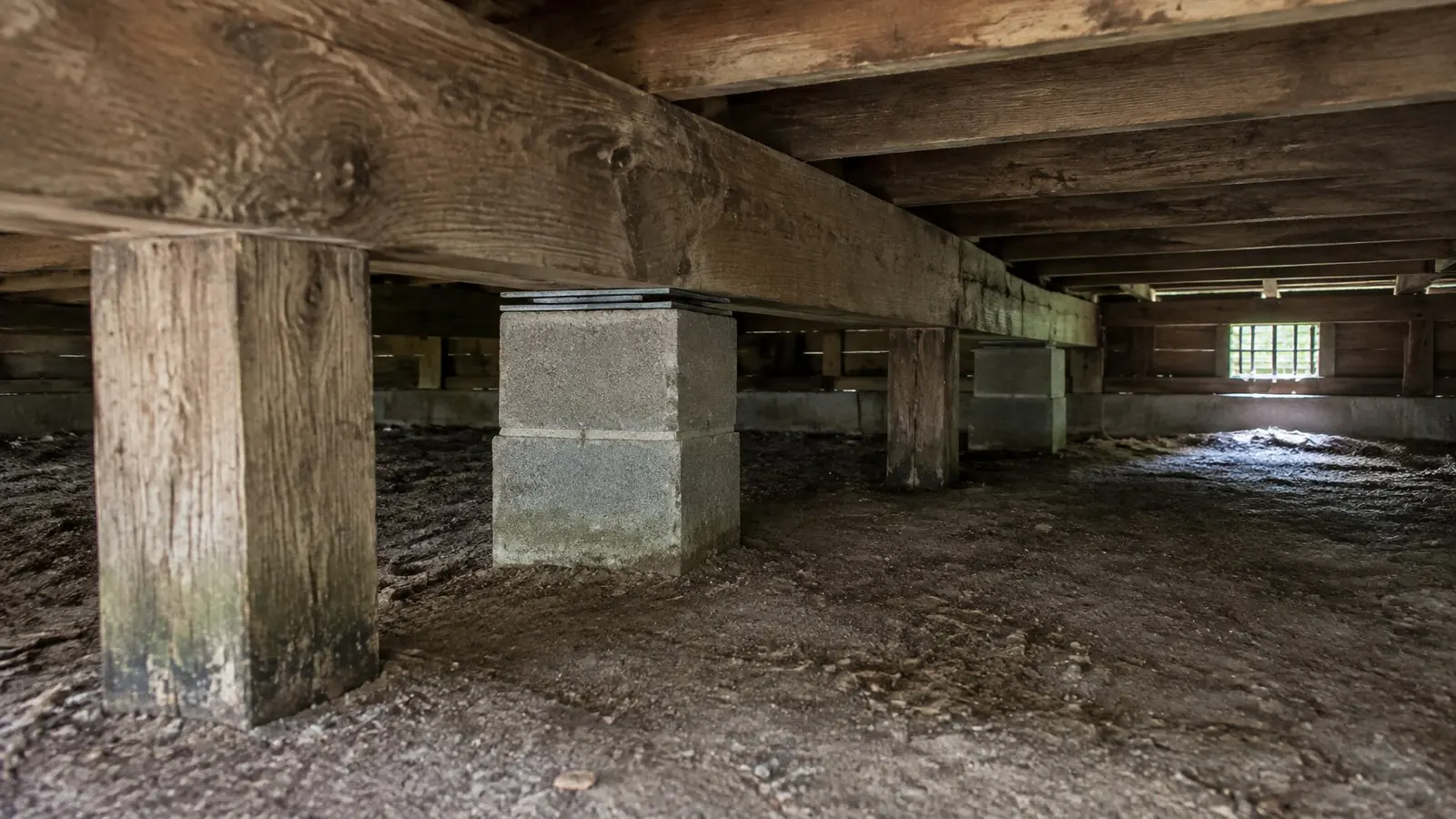
How the floor is held up
Piers carry beams. Beams carry joists. Joists carry the floor you walk on. The piers may be cedar posts, stacked brick, concrete blocks or poured concrete, and an old house often has a mix from different decades of repairs. Thin wood or steel shims on top of each pier take up the last gap.
Around the outside there may be a continuous concrete beam, or only a skirt of siding or stone that hides the crawl space and carries nothing.
What goes wrong under there
Piers sink or lean
Small footings on soft or wet soil go down a little each year. A leaning pier holds less than an upright one.
Wood rots
Cedar posts decay where they meet the ground. Beams and joists soften where a pipe dripped or damp air sat for years.
Shims drop out
As wood dries and soil shifts, shims loosen and fall, leaving a beam hanging above its pier.
Too few supports
Some houses were built with long gaps between piers, and later additions, tile and stone counters loaded the floor further.
What you notice upstairs
- A floor that springs or dips as you cross it.
- A gap opening under the baseboards along one wall.
- Doors out of square in the middle of the house, not only at the outside walls.
- A musty smell that is stronger after rain.
- Skirting that has pulled away from the house or bowed.
What a company checks in the crawl space
Someone has to go under the house. An inspection done only from the living room is half an inspection.
- Each pier: is it upright, is it touching its beam, and what is it standing on.
- Beams and joists, probed with a tool for soft wood near plumbing and along outside walls.
- Signs of standing water, and whether the vents in the skirting are open.
- Leaks from supply and drain pipes.
- Floor heights above, matched to what was found below.
What crawl space repair may involve
Proposals range from light to heavy. Reshimming adjusts the gaps on top of existing piers to bring the floor back up. Piers can be added between old ones, or replaced with concrete on wider pads. Rotten lengths of beam or joist are cut out and replaced, or a new piece is fixed alongside a weak one. Where water is the cause, grading and vents are part of the job.
Ask which of these is proposed and why, and ask what happens if more rot is found once work begins.
Old houses and city review
Austin's Historic Preservation Office reviews exterior changes to buildings 45 years old or older when a permit is applied for. The application is sent on to that office automatically. If the work will change skirting, porch piers or anything else visible from outside, mention it early. The permit guide has more, with links to the city's preservation page.
Questions about pier and beam houses
Is reshimming a lasting repair?
It puts the floor back for now and suits a house whose piers are sound. If the piers keep sinking, the floor will need adjusting again. Ask how long the company expects it to hold in your soil.
Should the crawl space be sealed up to keep damp out?
Closing vents can trap moisture. Encapsulation and vapour barriers are a specialist trade of their own, close to waterproofing, and a foundation repair company may or may not offer them.
Can a pier and beam house be converted to a slab?
It is rarely done. Raising, supporting and repairing the existing structure is the normal route.
Want it looked at?
Phone, say where the house is and what has changed, and you will be speaking with an independent local foundation repair company. It can book a visit to measure the floors and tell you what it finds.
Calls may be recorded. Austin Foundation Repair Help refers callers and repairs nothing itself, as the referral disclosure sets out. Call details are handled under the privacy policy.