Signs
Foundation crack repair: cracks in the slab itself
Cracks can develop as concrete cures or when its support changes. Record their position and whether they have changed; an inspection can assess the cause.
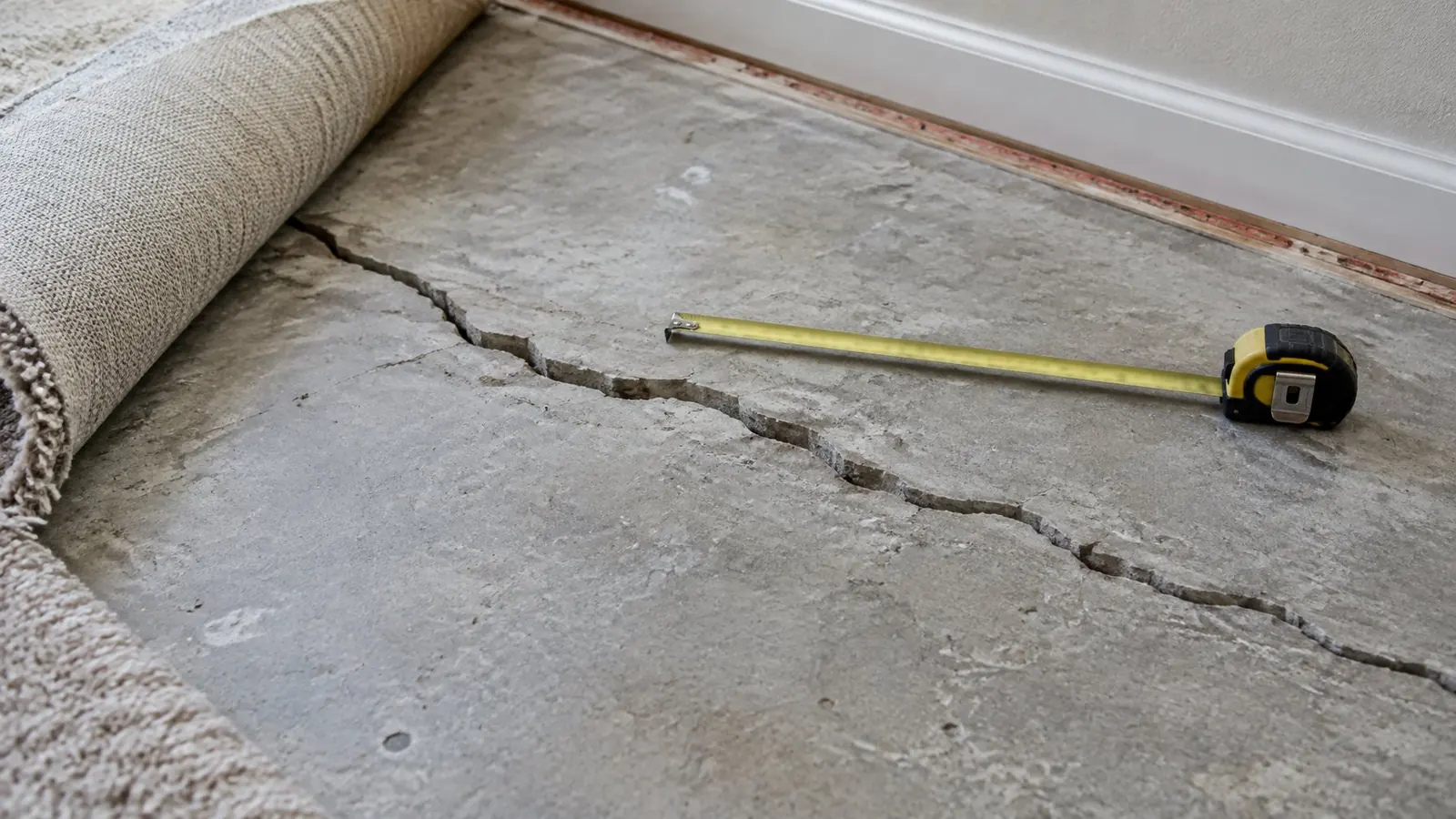
Where slab cracks turn up
Most of a slab is hidden under flooring, so people meet its cracks in a few places: the garage floor, the strip of concrete visible outside below the brick, under carpet pulled back for replacement, and as a straight run of broken floor tiles.
Features to record for the inspection
| Feature | What to record | Changes to mention |
|---|---|---|
| Edges | Both sides sit at the same height | One side stands proud, so a fingertip or a shoe catches on it |
| Width | Thin as a pencil line and the same all along | Wide enough to hold a coin, or wider at one end |
| Change | Looks as it did years ago | Longer or wider than in your last photo |
| Reach | Stops short of the walls | Runs to the outside edge and shows on the face of the slab |
| Company | Nothing else in the house has changed | Doors nearby bind, or walls above it have cracked |
Thin, level cracks mostly date from the weeks after the pour, when concrete shrinks as it dries.
Two Texas details
Corner cracks. A wedge-shaped piece breaking loose at an outside corner of the slab, under the brick, is common on Texas houses and is frequently only cosmetic. Have it looked at alongside everything else and do not let it be the whole argument for a repair.
Cable slabs. Many newer slabs here are post-tensioned: steel cables run through the concrete and were pulled tight after it set. Look for a stamp pressed into the garage floor near the door. Never drill, cut or core into such a slab without a professional locating the cables first.
What foundation crack repair can mean
The phrase covers two different jobs, and quotes sometimes blur them.
The first is sealing. Epoxy or a flexible polyurethane is injected to close the crack against moisture and insects and to give new flooring a sound base. Sealing does not hold a moving slab still.
The second is dealing with the reason the slab bent. If readings show one side has dropped, that means supporting it, usually on piers, and perhaps lifting it. If a leak under the slab swelled the clay, it means a plumber first. The methods guide describes the options a company may put forward.
What an inspection of a slab crack includes
- Floor height readings on both sides of the crack and through the rest of the house.
- A look at the outside edge of the slab where the crack meets it.
- Questions about water bills and any leak repairs, and sometimes a pressure test of the drain lines.
- Whether the slab is post-tensioned, which changes how any drilling is done.
Questions about slab cracks
Does a cracked slab always need piers?
No. Many cracked slabs are stable and need nothing, or need only sealing before new flooring goes down. Piers are for slabs that readings show have moved and are likely to keep moving.
Can I seal a crack myself?
A thin, level crack in a garage floor can be filled with a concrete crack sealant from a hardware store. It is a surface fix. If the crack has a step or keeps growing, have it inspected instead.
Will the crack close if the house is lifted?
It may narrow. It rarely vanishes, and lifting can open hairlines elsewhere. A careful company says so before it starts.
Want it looked at?
Phone, say where the house is and what has changed, and you will be speaking with an independent local foundation repair company. It can book a visit to measure the floors and tell you what it finds.
Calls may be recorded. Austin Foundation Repair Help refers callers and repairs nothing itself, as the referral disclosure sets out. Call details are handled under the privacy policy.